For many people exploring fitness as adults or as parents choosing activities for their kids, the question is not “Should I do something?”—it is “Which path fits my goals and personality?”
Taekwondo classes for beginners and gym training both promise improvement, but they work very differently. Choosing the wrong route can lead to burnout, confusion, or wasted effort.
To make an informed decision, let’s compare structured martial arts with traditional gym training paths.
Beyond Workouts: What Training Actually Structures Your Progress
When evaluating options like Taekwondo classes for beginners versus gym training, looking at features side-by-side helps clarify what each path prioritizes. This is not just about effort—it is about how goals, support, and skill progression are built into your investment.
- Purpose & Approach
- The Taekwondo classes for beginners focus on skill acquisition, discipline, and progression, blending physical fitness with technique, focus, and respect.
- Gym training is typically self-directed or trainer-assisted, focusing on strength, cardio, and general health without structured skill development.
- A structured class like Taekwondo gives you milestones (belt levels, skill lists), while gym training often requires self-set benchmarks.
- Instruction & Community
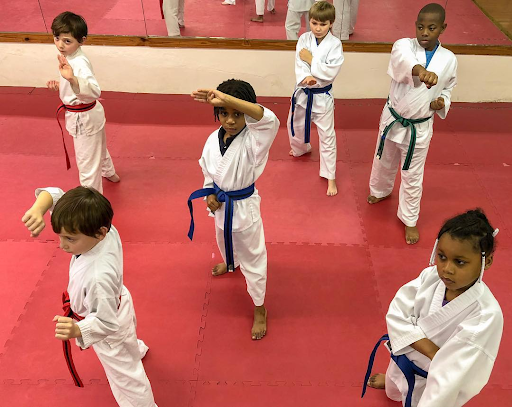
- Class Environment: In a Taekwondo class, beginners train together with clear stages and shared progression. An instructor leads warm-ups, drills, and forms.
- Gym Setting: You may have a personal trainer (sometimes at an extra cost), but most of the time you navigate equipment and routines independently.
- According to ResearchGate, “Members with structured group classes show higher long-term retention than those who train independently.”
- Physical & Mental Skill Development
- Taekwondo Classes for Beginners:
- Emphasizes coordination, balance, technique, and reflexes.
- Builds mental traits like discipline, focus, and confidence (especially in kids and teens).
- Gym Training:
- Emphasizes strength, endurance, and body composition.
- May not include focused mental or technical skill training.
- Martial arts training is known not just for fitness but also for personal character development—a key reason families prioritize it for children in towns like Cordele, Vienna, and Ashburn.
- Structure & Accountability
- Taekwondo Beginners Class:
- Regular schedules, progression levels, and group cohesion create natural accountability.
- A class routine reduces decision fatigue—you show up, and you follow the curriculum.
- Gym Training:
- Often requires self-motivation and self-planning
- Without a clear curriculum, it is easier to plateau or skip sessions
- Consistency is a major factor in long-term results, and structured programs often support it better.
- Long-Term Goals & Motivation
- Taekwondo Classes for Beginners: Ideal for people who want purposeful progression—a journey from basics to competency and possibly leadership in later stages.
- Gym Training: Works well for those who want flexible workouts without external expectations or tests.
- Cost & Value Considerations
- Taekwondo Beginners Class: Often comes with a set curriculum and instructor guidance included in membership.
- Gym Training: Base membership may be affordable, but effective progress often requires personal training sessions (higher cost).
- When evaluating cost per outcome (results + retention), structured classes can offer better returns for many beginners.
Feature Comparison Table
| Feature | Taekwondo Beginners Classes | Gym Training |
| Training Focus | Skill + Fitness + Discipline | Fitness and Strength |
| Structured Progress | Yes (Belts/Levels) | No (Self-Directed) |
| Accountability | High (Scheduled Classes) | Variable |
| Community Support | Group Learning | Individual with Optional Trainer |
| Mental Skills Training | Built-In | Optional |
| Cost Predictability | Fixed Curriculum | Variable (Extra Trainers) |
Real-World Fit: How These Paths Feel
- Parents Choosing for Kids: A Taekwondo beginner’s class often provides confidence, focus, and discipline alongside physical activity—useful for school performance and social skills.
- Adults Wanting General Fitness: Gym training can work, but without structure, many feel aimless after initial gains.
- Teens & Families in Pitts and Rochelle: Structured programs like martial arts deliver identity-forming experiences, not just workouts.
Next, we will explore where structured martial arts training supports deeper personal growth and commitment.
Beyond Exercise: Training That Shapes Daily Life
When comparing a Taekwondo beginner’s class to gym training, many people at the consideration stage feel stuck between working out and meaningful growth.
Fitness goals are common, but deeper outcomes—like discipline, confidence, self-control, and long-term resilience—are not always delivered by a treadmill session or random workout plan.
Below, we explore why structured martial arts training attracts learners who want results that extend far beyond the gym floor.
- Defined Progress vs Unstructured Effort
- Taekwondo Beginner Classes: Progress is explicit, with belt ranks and skill milestones marking achievement. You know what comes next and how to get there.
- Gym Training: Progress depends on self-set goals and self-motivation; without clear milestones, many trainees plateau early.
- For many beginners, knowing how they are advancing keeps motivation high and makes improvement visible.
- Discipline That Transfers Beyond Training
- Structured martial arts training naturally reinforces discipline, respect, and focus—qualities that help at school, work, and home.
- A study by PubMed Central found that “youth participating in structured sports programs show significant gains in self-discipline and social behavior compared with unstructured physical activity.”
- Skills developed in a class like a Taekwondo beginners class do not stop when the session ends—they shape habits.
- Accountability Through Community
- In martial arts classes, you train with peers, progress together, and show up for scheduled sessions. This creates natural accountability.
- Group fitness settings in a gym may have community moments, but without a curriculum and cohort progression, cohesion is weaker.
- For many families and adults around Cordele, GA (and nearby Vienna, Arabi, and Ashburn), this sense of community keeps engagement higher.
- Mental Resilience and Emotional Regulation
- Martial arts require not just physical coordination but also mental engagement, especially when learning patterns under pressure.
- Research published in Psychology of Sport and Exercise shows that “martial arts participation is linked with stronger emotional regulation and stress resilience compared to general fitness routines.” (Source: ScienceDirect)
- A Taekwondo beginner’s class becomes a space where emotional growth is an intentional part of skill development.
- Teaching Life Skills, Not Just Moves
- At GTC Studio & Health, we emphasize respect, time management, concentration, and confidence alongside technique.
- No matter your age—whether kids in our fall, winter or spring & pick up service programs or adults pursuing fitness—these skills benefit everyday life.
- Structured martial arts keep training goal-oriented rather than routine-oriented.
- Long-Term Commitment Creates Lasting Change
- Gym training often satisfies short-term goals (weight loss, strength gain), but martial arts fosters lifelong learning and adaptability.
- A Taekwondo journey—from basics to higher belts—encourages continuous growth rather than “fitness as a hobby.”
- Coaching and Personalized Feedback
- Beginners in Taekwondo receive direct guidance from instructors trained to break down techniques progressively.
- Gym floors may provide trainers, but consistency and curriculum depth vary widely, and cost often increases with personalized coaching.
- Purpose Meets Physicality
- Some people want exercise; others want purposeful training.
- A Taekwondo beginner’s class ties physical skills to personal development—reinforcing why you train, not just how.
Your Questions About Structure, Skills, and Seriously Useful Training
FAQ 1. What Age Is Ideal For a Taekwondo beginner’s class?
Answer: Taekwondo suits all ages; kids, teens, and adults benefit from structured progression and life-skill training.
FAQ 2. Is a Martial Arts Class Intimidating for First-Timers?
Answer: Beginners often feel welcomed; classes are designed for all levels, with clear steps forward.
FAQ 3. How Does Discipline in Martial Arts Compare With Gym Workouts?
Answer: Martial arts integrates discipline into every session, while gym workouts rely on self-motivation.
FAQ 4. Will a Taekwondo Class Help With Confidence?
Answer: Yes—learning new skills, sparring safely, and achieving ranks all boost confidence measurably.
FAQ 5. Do Parents Need Experience to Enroll Kids?
Answer: No prior experience is needed; instructors tailor pacing, especially for young learners.
With a clear sense of long-term growth, next explore choosing the right training fit.
Finding Your Fit: Structure That Matches Your Season of Life
At GTC Studio & Health, we have seen firsthand that choosing between a Taekwondo beginners class and gym training really depends on what kind of structure you need right now.
This path is ideal for kids who thrive with routine, parents seeking confidence and discipline through martial arts, and adults who want guided progress—not guesswork.
Our Taekwondo programs, after-academic learning, day martial arts programs options, summer camp, and even fitness kickboxing create consistency that supports long-term growth.
That said, if someone prefers fully self-directed workouts with minimal instruction, a gym may feel more flexible.
For seniors or those focused on gentle wellness, we often guide them toward Tai Chi or supportive health routines instead.
Serving Cordele and nearby towns like Vienna, Arabi, Rochelle, Warwick and Ashburn, we help families choose intentionally. If structured growth feels right, explore our Taekwondo beginners class and see if this is your next step forward.